Second-hand racking can appear to be a cost-effective solution, particularly for businesses expanding or reconfiguring a warehouse. In many cases, used pallet racking can offer excellent value. However, it also introduces a level of risk if it is not properly assessed before purchase and before use.
Without the right checks, you may be installing a racking system that is unsafe, non-compliant, or simply not suitable for your operation. What looks like a saving upfront can quickly become a liability if the system fails, cannot be verified, or proves impossible to repair properly later on.
The good news is that there is a lot of quality second-hand racking on the market. The key is knowing what to check before you commit to it.
Why Second-Hand Pallet Racking Needs Careful Assessment
Used pallet racking should never be treated as a straightforward like-for-like purchase. Unlike buying new, second-hand racking may have an unknown history. It may have been damaged in a previous warehouse, altered during dismantling, stored incorrectly, or reassembled with incompatible parts from another system.
This is where problems often start. A second-hand racking system may look fine at first glance, but if key details cannot be verified, the risks can be significant. You need to know what the system is, where it came from, whether it is complete, whether it has been modified, and whether it is still suitable for the loads and layout in your current warehouse.
Check the Manufacturer and Identify the Racking System
The first priority is identifying the system and confirming its origin. If the manufacturer cannot be confirmed, or if components from different systems have been mixed, then the load capacity is effectively unknown.
This is a major issue with second-hand pallet racking. Different manufacturers use different dimensions, connector details, tolerances, and structural designs. Components that appear similar are not always compatible. Mixing beams, frames, bracing, or connectors from different systems can create a racking layout that looks complete but has no reliable basis for safe use.
Before using second-hand racking, you should be confident about the make and model of the system, the origin of the components, and whether they all belong together. If that cannot be established, the system should be treated with caution.
Inspect the Structural Condition of the Racking
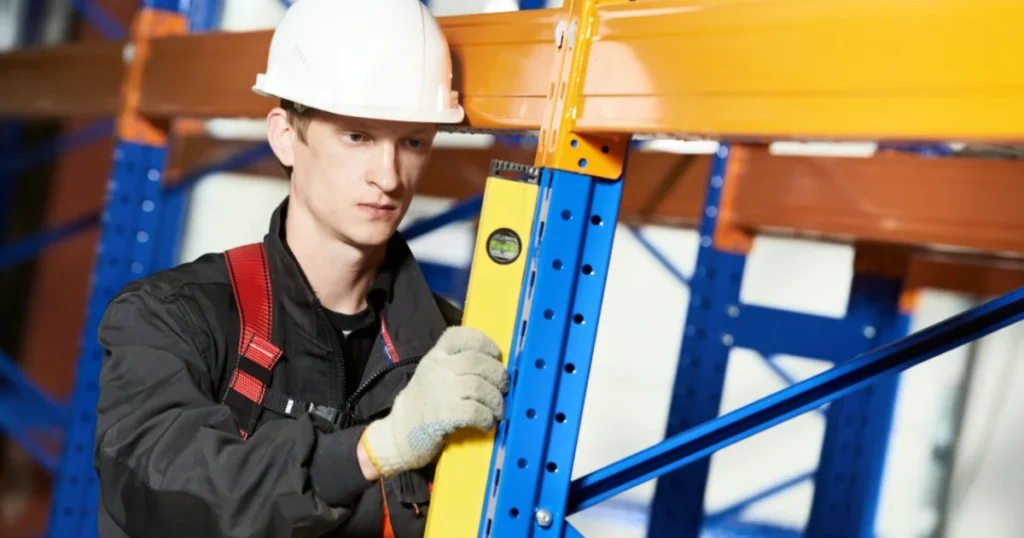
Once the system has been identified, the structural condition must be carefully assessed. This includes checking uprights for impact damage, bends, twists, dents, or corrosion. Bracing should be intact, correctly configured, and free from distortion. Beam connectors should be undamaged, fully engaged, and secure.
It is also important to look at the condition of baseplates, floor fixings, safety locks, and any other structural or safety-critical components. Even small defects can affect the strength and stability of the system, especially once it is loaded in service.
Second-hand racking may have suffered years of forklift contact or overloading in its previous environment. That history is not always obvious from appearance alone, which is why a proper assessment is so important. A professional racking inspection can help identify damage that might otherwise be missed before the system is put into use.
Get a Quote
With over 30 years of experience our fully SEMA approved inspectors offer nationwide racking inspection and training.
Check the Quality of the Installation
Installation quality is just as important as the condition of the components themselves. Even if the racking is structurally sound, poor installation can still make the system unsafe.
Common issues include incorrect frame orientation, missing components, loose or missing beam locks, damaged fixings, and non-standard bracing arrangements that compromise stability. In some cases, second-hand pallet racking has been reconfigured in ways that were never intended by the original design.
All racking should be assembled in line with the manufacturer’s requirements and installed correctly for the layout being used. If the installation has not been completed properly, the system may not perform as expected under load.
Confirm the Load Capacity Before Putting Racking Into Use
Load capacity is one of the most important checks when buying second-hand racking. Without original design data, manufacturer specifications, or reliable technical information, there is no dependable way to confirm safe working loads.
This creates a high risk of overloading, particularly if the system has been modified, reconfigured, or mixed with components from another brand. Assuming the racking can carry the same loads as a similar-looking system is not enough. Safe working loads need to be based on known, verifiable information.
If the load capacity cannot be confirmed, that should be treated as a serious concern. Racking should never be put into service on guesswork.
Make Sure the Racking Is Properly Fixed to the Floor
Another essential check is whether the racking is securely fixed to the floor in accordance with manufacturer requirements. Floor fixings play a key role in the overall stability of the system and help improve resistance to impact during normal warehouse operations.
Missing, incorrect, or poorly installed anchors can reduce the performance of the racking and increase the risk of instability. This is particularly important in busy environments where forklifts are operating close to the frames on a daily basis.
With second-hand warehouse racking, it should never be assumed that the correct fixings are present or that the previous installation method is still suitable for the new site.
Check Whether Replacement Parts Are Still Available
It is also worth considering whether the system is still supported and whether replacement parts can still be sourced if damage occurs. This is an area that is often overlooked when purchasing used pallet racking.
The UK benefits from a strong core of established manufacturers such as Link 51 and Dexion, where parts and components are often still readily available. That can make future maintenance and compliant repairs much more manageable.
One of the more common issues seen on site is older or obsolete systems where manufacturers are no longer trading, technical information is limited, or replacement parts are no longer available. In those situations, compliant repairs can become difficult or, in some cases, impossible.
A second-hand racking system may seem like a bargain at the point of purchase, but if it cannot be repaired properly when damage occurs, the long-term value quickly starts to disappear.
Why a Pre-Use Racking Inspection Is So Important
There is, however, a lot of good second-hand or pre-loved equipment available on the market, and it can represent excellent value when sourced and installed correctly. The key is buyer beware.
It is always wise to involve someone experienced in the industry to carry out a review before purchase, and once installed, a pre-use inspection should be completed to confirm the system has been built correctly and is fit for purpose.
A pre-use pallet racking inspection is especially important with second-hand systems because it provides an opportunity to identify installation issues, missing parts, damage, incompatibility, or layout problems before stock is loaded onto the racking. That final check can prevent costly mistakes and reduce the risk of serious problems once the system is live.
Train Staff to Spot Problems Early
Even where second-hand racking has been sourced carefully and installed correctly, it still needs to be used and monitored properly. Warehouse teams should know what signs of damage to look for and understand the importance of reporting issues as soon as they are identified.
This is where racking awareness training can add real value. Helping staff recognise common warning signs such as bent uprights, damaged bracing, missing beam locks, or impact damage can make it much easier to manage risk on a day-to-day basis.
Second-Hand Racking Can Be Good Value, But Only If It Is Safe
Ultimately, second-hand racking is only a saving if it is safe, compliant, and fit for purpose. With the right checks, it can be a smart investment. Without them, it becomes an unnecessary risk.
Before using second-hand pallet racking, make sure the system has been properly identified, its condition assessed, its load capacity verified, its installation checked, and its ongoing support considered. A quick expert review before purchase and a thorough inspection before use can make all the difference.
There is a wealth of knowledge and experience available in this sector, and a timely expert check can help you avoid unsafe assumptions, expensive remedial work, and problems that could have been prevented from the start. If you need advice on whether a system is safe to use, our warehouse racking inspection service can help you assess it properly before it becomes a bigger issue.
Get a Quote
With over 30 years of experience our fully SEMA approved inspectors offer nationwide racking inspection and training.